Caribbean Soursop Juice — Jamaican Style Recipe
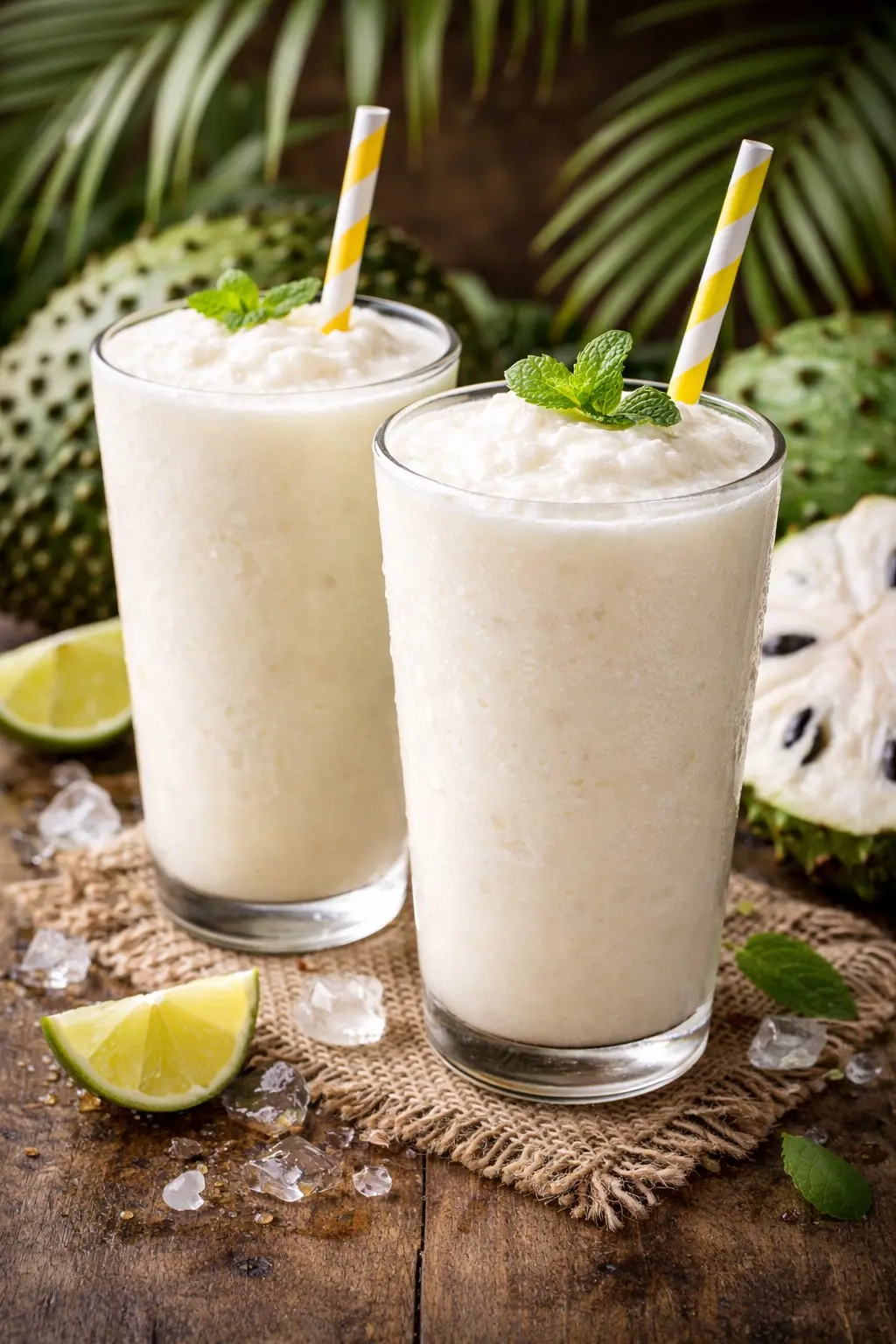
Creamy, dreamy Caribbean soursop juice with condensed milk and nutmeg — a refreshing tropical drink bursting with antioxidants.
⏱️ 15 min prep🔥 0 min cook👥 6
🟢 Soursop
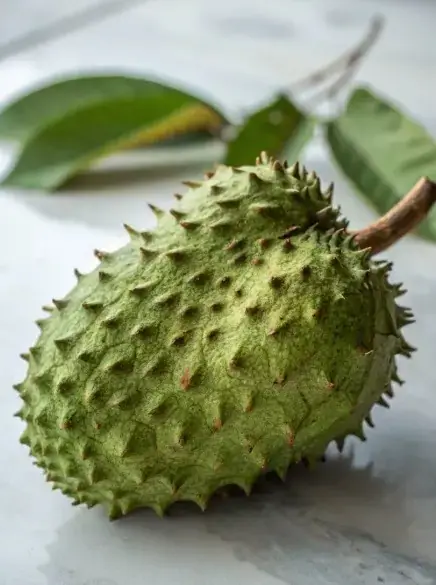
Annona muricata
Soursop — also known as graviola or guanábana — is a large green spiny fruit with creamy white flesh and a unique sweet-sour flavor. What does soursop taste like? It combines notes of strawberry and pineapple with citrusy undertones and a creamy, custard-like texture. Soursop vs graviola: they are the exact same fruit. Graviola is simply the Spanish and Portuguese name used across Latin America, while soursop is the English name used in the Caribbean. Both names refer to Annona muricata. Soursop is widely used in juices, smoothies, and ice cream across the Caribbean. Looking for soursop fruit where to buy? Check Caribbean markets, Latin grocery stores, or frozen pulp in the tropical fruit section of larger supermarkets.
Want a deeper guide?
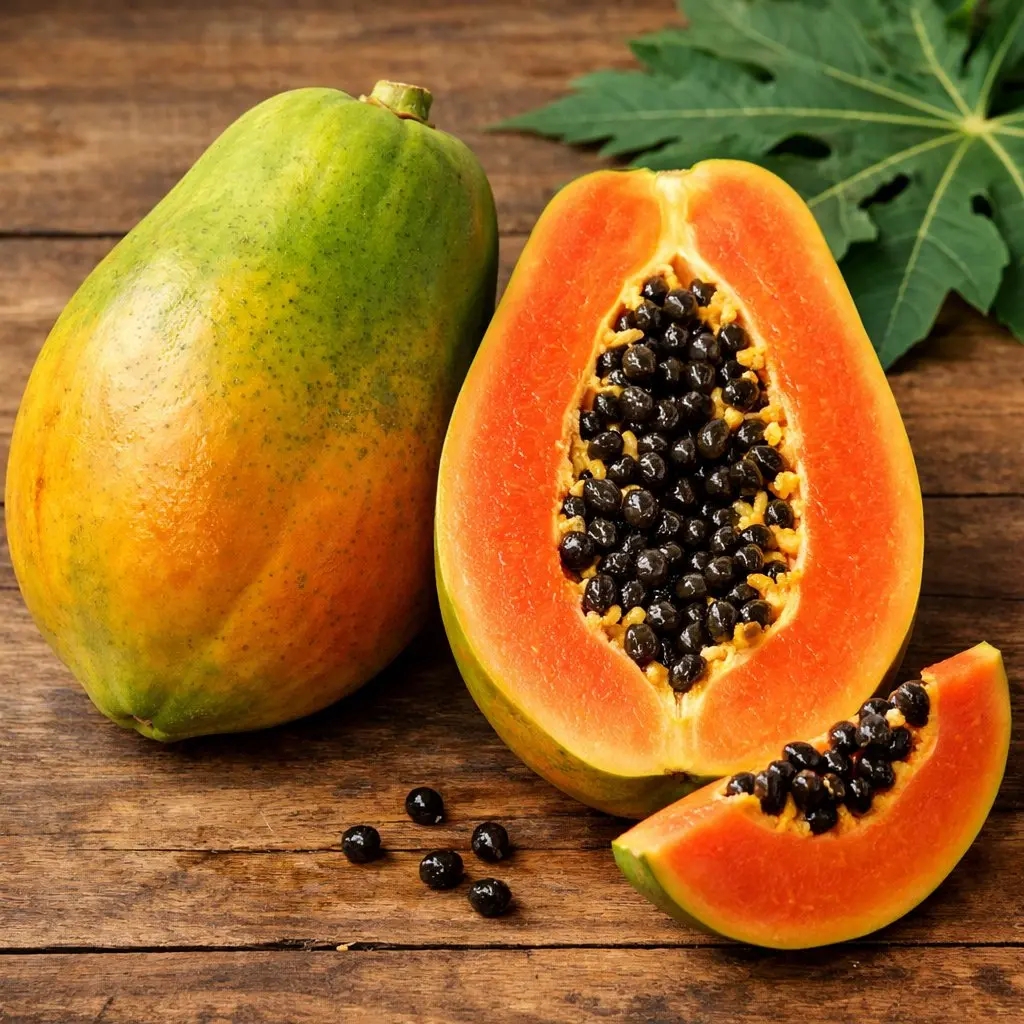
Go further with soursop, papaya, and banana in the digital Island Fruit Guide ebook.
Explore the guideCut the fruit in half and scoop out the white flesh. Remove the large black seeds. Eat fresh, blend into juice with water and sweetener, or use in smoothies, ice cream, and desserts. The pulp freezes beautifully.
Store unripe soursop at room temperature until slightly soft. Ripe fruit keeps 2-3 days in refrigerator. Freeze pulp for up to 6 months.
Rich in vitamin C, B vitamins, potassium, magnesium, and fiber. One cup of pulp contains about 148 calories with 7.4g of fiber.
Yes — soursop and graviola are the exact same fruit. Soursop is the English name used throughout the Caribbean and in English-speaking countries. Graviola is the Spanish and Portuguese name used across Latin America, Brazil, and in herbal medicine contexts. Both names refer to Annona muricata — the large green spiny fruit with creamy white flesh. You may also hear it called guanabana (Spanish) or guyabano (Filipino). So whether you search for soursop health benefits or graviola health benefits, you're looking for the same powerful tropical fruit.
Fresh soursop can be found at Caribbean markets, Latin grocery stores, and Asian supermarkets in cities with tropical communities. Look for fruit that yields slightly to gentle pressure and has a fragrant, tropical aroma. If fresh soursop isn't available, frozen soursop pulp is sold year-round in the tropical fruit section of larger supermarkets and online — perfect for making Caribbean soursop juice, smoothies, and desserts at home.
Creamy, dreamy Caribbean soursop juice with condensed milk and nutmeg — a refreshing tropical drink bursting with antioxidants.
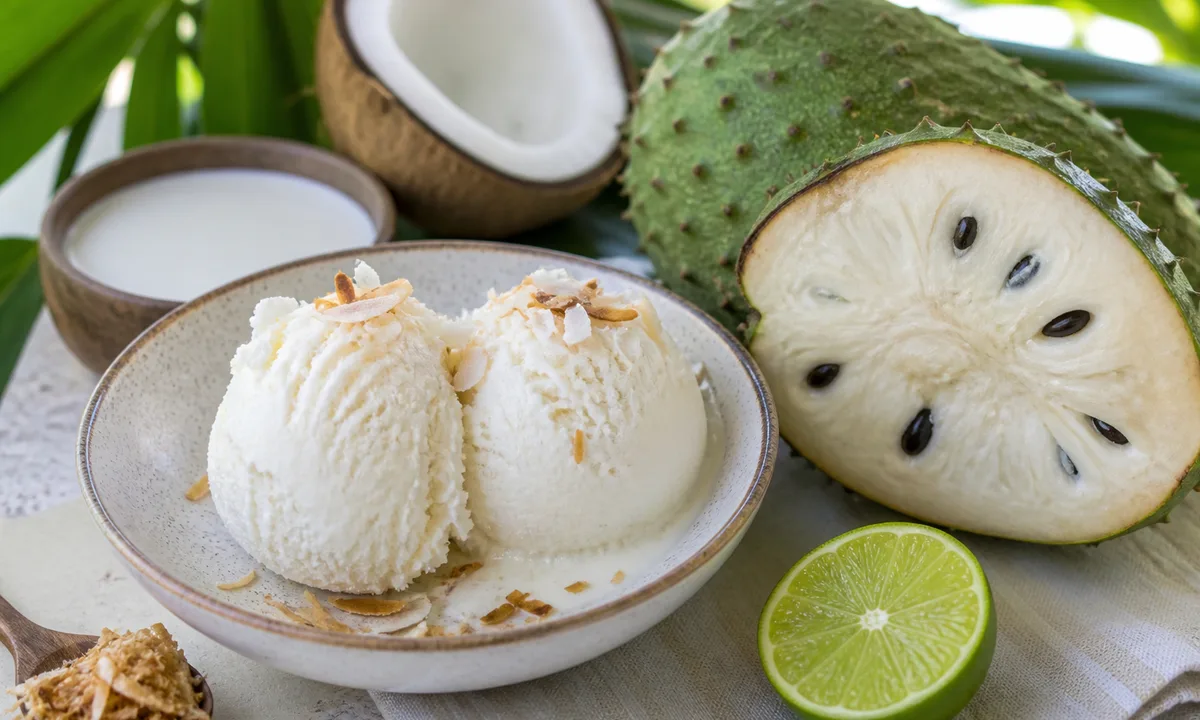
A creamy, dairy-free soursop and coconut ice cream with nutmeg — tropical, tangy, and deliciously refreshing.
See how Soursop stacks up against other tropical fruits — nutrition, taste, and uses side by side.
Open Comparison Tool →Soursop vs Sweetsop? Papaya vs Banana? Discover which Caribbean superfruit is your perfect match.
Find Your Match →Think you know Caribbean fruits? Take our 5-question quiz and unlock a special reward!
Take the Quiz →Get the complete evidence-based guide to soursop — nutrition data, health research, safety precautions, and 15+ authentic recipes.