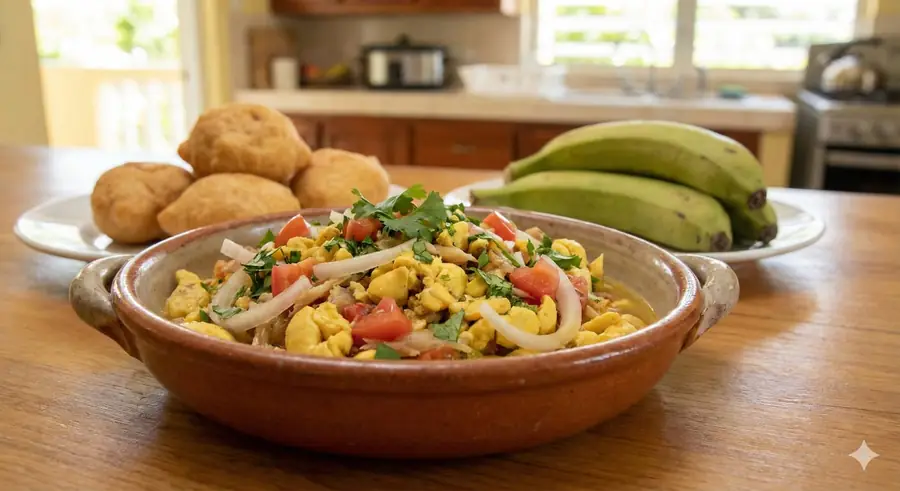
Jamaican Ackee and Saltfish
Jamaica's beloved national dish combining creamy ackee with savory saltfish — a Caribbean breakfast classic packed with protein and island flavour.
⏱️ 15 min prep🔥 25 min cook👥 4
🟡 Ackee🍞 Breadfruit
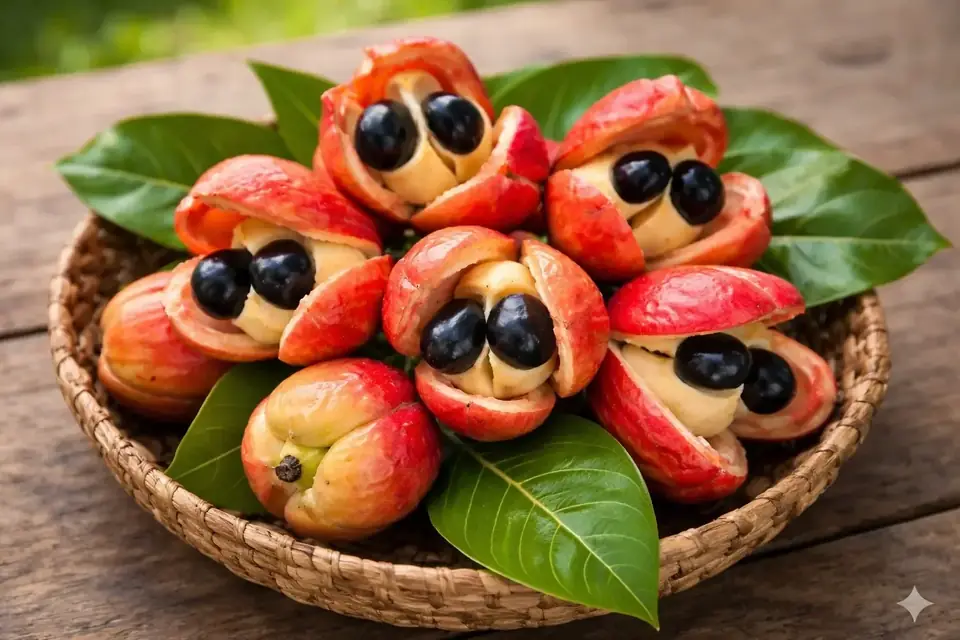
Blighia sapida
Ackee is Jamaica's national fruit, used in ackee and saltfish. Only the edible arils of fully ripe, properly processed fruit are safe to eat. Unripe fruit, seeds and rind are unsafe.
Ackee is the national fruit of Jamaica, known for its unique buttery flavor and creamy texture when cooked. What does ackee taste like? It has a mild, nutty, buttery taste similar to scrambled eggs with a subtle sweetness — making it the perfect pairing for savory saltfish. Ackee and saltfish is Jamaica's beloved national dish. Is ackee poisonous? Ackee contains hypoglycin A, which is especially dangerous in unripe fruit and remains concentrated in the seeds and rind even after ripening. Only the edible flesh of fully ripened, correctly processed ackee is considered safe; incorrect preparation may cause serious harm. Ackee fruit from Jamaica is a symbol of island culture and heritage.
Only use fully ripened ackee prepared by someone trained in safe handling, or properly processed ackee from a reputable producer. Never eat the seeds, rind, or unripe fruit. Boiling cannot make unripe ackee safe. Traditionally sautéed with saltfish, onions, tomatoes, and scotch bonnet peppers.
Fresh ackee should be used within 2 days. Canned ackee can be stored for up to 2 years. Do not refrigerate uncooked fresh ackee.
Rich in protein, healthy fats, vitamin C, zinc, and potassium. One cup provides about 150 calories with 15g of fat and 3g of protein.
This is the most common question about ackee, and the answer is important: unripe ackee is unsafe, and even ripe fruit must be properly processed before eating. Unripe ackee contains hypoglycin A and B — toxins that can cause Jamaican Vomiting Sickness, a potentially fatal condition. Only the edible arils of fully ripened, properly processed ackee should be eaten. The seeds and rind are never safe to eat, and cooking will not make unripe ackee safe. Choose canned or frozen ackee from processors with established food-safety controls; fresh fruit should be handled by trained preparers. Following these guidelines, millions of people safely enjoy ackee and saltfish — Jamaica's national dish — every day.
Safety reminder: Never force open an unripe ackee. Wait for the fruit to split naturally on the tree.
Ackee has a mild, nutty, buttery flavor with a creamy texture remarkably similar to scrambled eggs. It has a subtle sweetness that makes it the perfect pairing for savory ingredients. When sautéed with saltfish, onions, tomatoes, and scotch bonnet peppers, ackee becomes rich and satisfying. The taste is unique among fruits — not overly sweet, but deeply flavorful and comforting. Many first-time eaters are surprised by how savory and versatile this Jamaican fruit is.
Jamaica's beloved national dish combining creamy ackee with savory saltfish — a Caribbean breakfast classic packed with protein and island flavour.
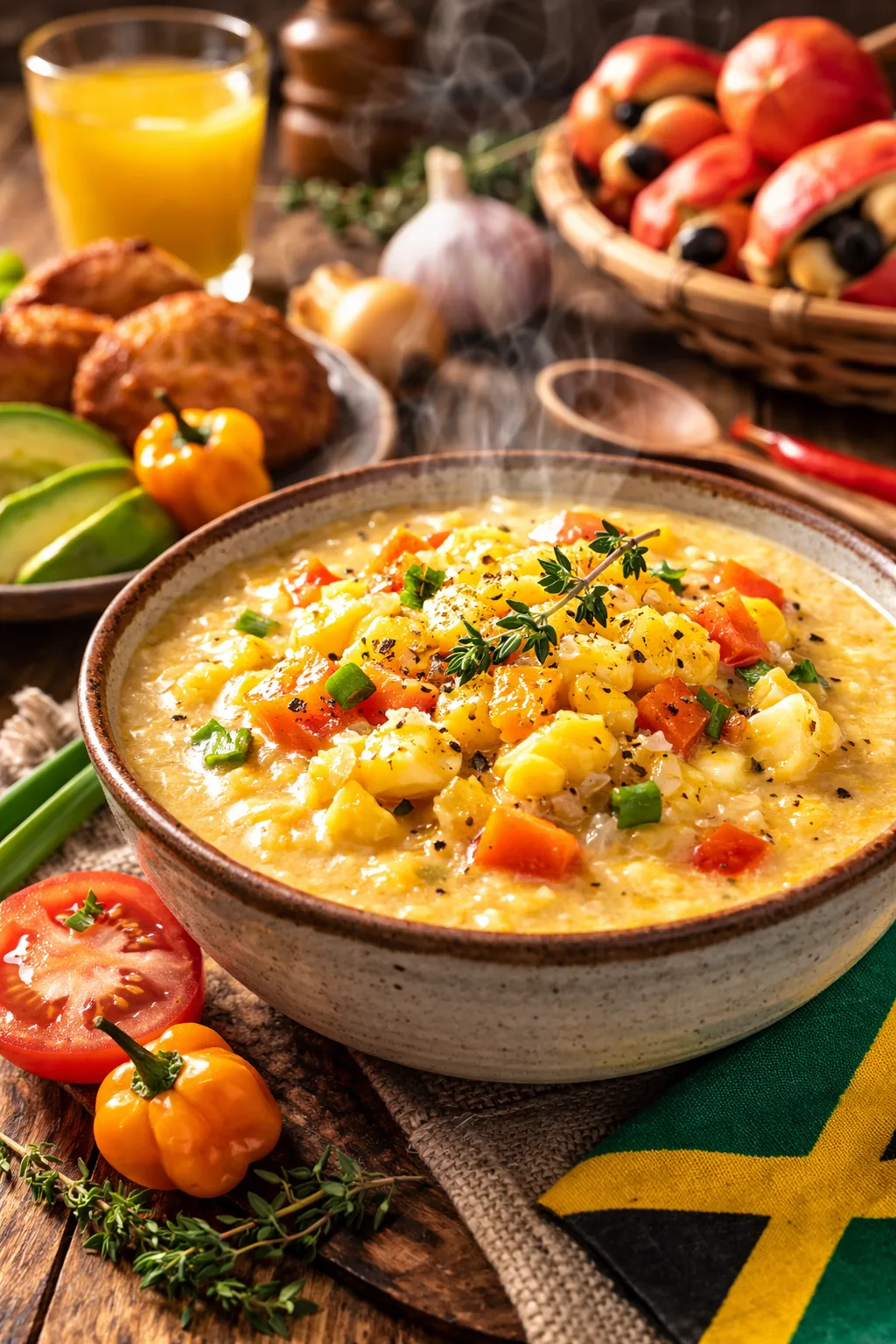
A creamy Jamaican-style ackee breakfast porridge/spread blended with coconut milk, warm spices, and lime — perfect on toast or as a comforting bowl.
See how Ackee stacks up against other tropical fruits — nutrition, taste, and uses side by side.
Open Comparison Tool →Soursop vs Sweetsop? Papaya vs Banana? Discover which Caribbean superfruit is your perfect match.
Find Your Match →Think you know Caribbean fruits? Take our 5-question quiz and unlock a special reward!
Take the Quiz →155 authentic savory recipes featuring tropical fruits — curries, BBQ marinades, salads, and grilled masterpieces.