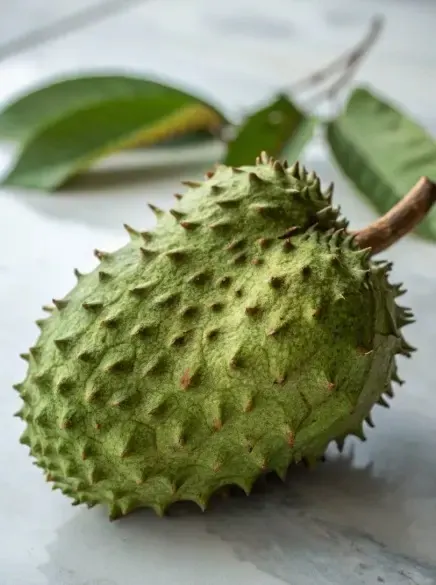
Soursop Health Benefits: What Science Actually Says (Fact vs. Fiction)
Can soursop really fight cancer? We cut through the hype with peer-reviewed research and honest analysis of what this tropical fruit can and can't do.
Soursop, also known as Graviola or Guanabana, has exploded in popularity thanks to viral claims about its health benefits — especially around cancer. But what does the science actually say?
The Nutritional Facts
Soursop is genuinely nutrient-dense. A 100g serving provides 34% of your daily Vitamin C, 8% of your Potassium, 5% of your Magnesium, and 3.3g of dietary fiber. It's rich in antioxidants like luteolin, quercetin, and tangeretin.
Proven Benefits
- •High Antioxidant Load — Protects cells from oxidative stress. A 2014 study in Food Chemistry confirmed significant antioxidant activity.
- •Anti-Inflammatory — Soursop leaf extracts reduced inflammation by up to 37% in animal studies (Journal of Ethnopharmacology).
- •Immune Support — One cup provides 77% of daily Vitamin C needs.
- •Digestive Health — 3.3g fiber per 100g promotes gut health.
- •Antibacterial — Effective against bacteria causing gum disease, cavities, and cholera (BMC Complementary Medicine, 2016).
The Cancer Debate
In laboratory settings, soursop extracts containing acetogenins have killed breast and liver cancer cells. A 1996 study found potency 10,000x greater than the chemo drug Adriamycin — in a test tube.
However, there are NO large-scale human clinical trials. Killing cancer cells in a lab is fundamentally different from treating cancer in a person. Many substances kill cancer cells in labs. The challenge is doing so safely inside a living body.
The Verdict
Soursop is a healthy, nutritious tropical fruit with exciting research potential. Eat it because it's delicious and nutritious. Don't eat it expecting it to cure disease. Never replace conventional medical treatment with soursop.
Safety Warnings
Long-term, excessive consumption of soursop tea is linked to neurotoxicity. Always discard the seeds. Consult your doctor if you take blood pressure or diabetes medication.
Want More? Download the Full Ebook!
This article is an excerpt from our premium guides. Get the complete ebooks with 50+ fruit profiles, 100+ recipes, meal plans, and expert research.
💯 30-day money-back guarantee • 📥 Instant PDF download
🍽️ Related Recipes
More Articles
Quick Answer
Soursop (graviola/guanábana) is a nutrient-dense tropical fruit known for its sweet-sour flavor and creamy texture. It's rich in vitamin C, fiber, and antioxidants, with traditional uses in Caribbean cuisine and medicine.
- Best use: Research Caribbean fruits, tropical nutrition, recipes, and traditional island food culture.
- Nutrition summary: Focus on whole fruit, fiber, hydration, vitamin C, potassium, and antioxidant variety.
- Safety note: Herbal and wellness content is educational only. Do not replace professional medical care.
Search Intent Guide
| Intent | Direct answer |
|---|---|
| Informational | Learn what Soursop Health Benefits: What Science Actually Says is, how it is used, and why it matters in Caribbean food culture. |
| Comparison | Use the linked comparison guides to evaluate taste, nutrition, seasonality, and recipe fit. |
| Navigational | Explore fruit profiles, recipes, health guides, seasonal pages, and downloadable guides from IslandFruitGuide. |
| Commercial | Future-friendly areas are prepared for ebooks, affiliate product cards, premium calculators, and downloadable wellness tools. |
People Also Ask
What is the quick takeaway from Soursop Health Benefits: What Science Actually Says?
While soursop shows promising laboratory results, there are no large-scale human clinical trials proving it can cure cancer. It's a nutritious fruit with proven benefits for immune support, digestion, and antioxidant protection, but should be consumed as part of a balanced diet rather than as a medical treatment.
Is this article medical advice?
No. IslandFruitGuide articles are educational and should not replace advice from a qualified healthcare professional.
Where can I explore related fruit guides?
Use the related guides section to compare fruits, find recipes, check seasonal availability, and read nutrition-focused pages.
IslandFruitGuide Topic Clusters
Sources and Editorial Review
Reviewed by: IslandFruitGuide Editorial Team
Last Updated: June 17, 2026
Traditional Caribbean usage: Cultural notes are presented as food heritage and traditional usage, not as medical treatment claims.
Nutritional references: Nutrient summaries are cross-checked against public food composition and nutrition education references where available.