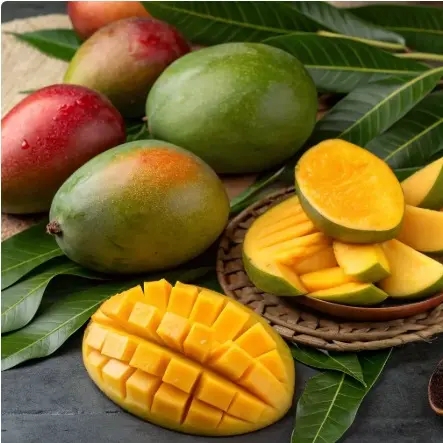
Caribbean Mango Varieties: A Complete Guide to the King of Fruits
From Julie to East Indian to Bombay — discover the incredible diversity of Caribbean mango varieties, their flavors, seasons, and how to enjoy each one.
The Caribbean grows some of the world's finest mangoes. While supermarkets typically stock one or two varieties, the islands are home to dozens of distinct cultivars — each with unique flavors, textures, and personalities.
Julie Mango
The most beloved mango in Trinidad and Tobago. Small, kidney-shaped, with fiberless, buttery flesh. Sweet with a slight tartness. Perfect for eating fresh or in chow (a spicy fruit salad). Season: June–August.
East Indian Mango
Jamaica's most prized variety. Small, flattened shape with brilliant sunset colors. Intensely sweet, fiberless, and aromatic. Often called the 'champagne of mangoes.' Season: June–July.
Bombay Mango
Large, oval, and deep red when ripe. Popular across the Eastern Caribbean. Sweet, juicy flesh with minimal fiber. Excellent for juicing and desserts. Season: May–August.
Kent Mango
A commercial favorite found worldwide. Large, oval, with green skin even when ripe. Sweet, fiberless flesh. Good for eating and processing. Available almost year-round in the Caribbean.
Number 11 (Graham)
A Jamaican classic — large, round, with reddish-orange skin. Sweet, juicy, with a distinctive flavor. The tree bears heavily and is popular in home gardens. Season: July–August.
How to Choose a Ripe Mango
- •Smell the stem end — a ripe mango is fragrant
- •Gently squeeze — it should give slightly
- •Color varies by variety — don't rely on color alone
- •A ripe mango feels heavy for its size
- •Avoid mangoes with wrinkled skin or black spots
Mango Nutrition
One cup of mango provides: • 100% of daily Vitamin C • 35% of daily Vitamin A • 20% of daily Folate • 3g of dietary fiber • Only 99 calories • Rich in polyphenol antioxidants
Want More? Download the Full Ebook!
This article is an excerpt from our premium guides. Get the complete ebooks with 50+ fruit profiles, 100+ recipes, meal plans, and expert research.
💯 30-day money-back guarantee • 📥 Instant PDF download
🍽️ Related Recipes
More Articles
Quick Answer
Caribbean mango varieties like Julie, East Indian, Bombay, and Kent offer diverse flavors, seasons, and uses - from fresh eating to juicing, chutneys, and desserts across the islands.
- Best use: Research Caribbean fruits, tropical nutrition, recipes, and traditional island food culture.
- Nutrition summary: Focus on whole fruit, fiber, hydration, vitamin C, potassium, and antioxidant variety.
- Safety note: Use fresh fruit safely, store prepared foods cold, and consider allergies or medication interactions.
Search Intent Guide
| Intent | Direct answer |
|---|---|
| Informational | Learn what Caribbean Mango Varieties: A Complete Guide to the King of Fruits is, how it is used, and why it matters in Caribbean food culture. |
| Comparison | Use the linked comparison guides to evaluate taste, nutrition, seasonality, and recipe fit. |
| Navigational | Explore fruit profiles, recipes, health guides, seasonal pages, and downloadable guides from IslandFruitGuide. |
| Commercial | Future-friendly areas are prepared for ebooks, affiliate product cards, premium calculators, and downloadable wellness tools. |
People Also Ask
What is the quick takeaway from Caribbean Mango Varieties: A Complete Guide to the King of Fruits?
The quick takeaway is that the Caribbean grows dozens of distinct mango varieties like Julie, East Indian, Bombay, and Kent, each with unique flavors, seasons, and uses - from fresh eating to juicing and desserts.
Is this article medical advice?
No. IslandFruitGuide articles are educational and should not replace advice from a qualified healthcare professional.
Where can I explore related fruit guides?
Use the related guides section to compare fruits, find recipes, check seasonal availability, and read nutrition-focused pages.
IslandFruitGuide Topic Clusters
Sources and Editorial Review
Reviewed by: IslandFruitGuide Editorial Team
Last Updated: June 17, 2026
Traditional Caribbean usage: Cultural notes are presented as food heritage and traditional usage, not as medical treatment claims.
Nutritional references: Nutrient summaries are cross-checked against public food composition and nutrition education references where available.