Ackee and Saltfish: The History Behind Jamaica's National Dish
Explore the fascinating history of Jamaica's national dish — from West African origins to Captain Bligh, and why ackee and saltfish became a Caribbean breakfast icon.
Ackee and saltfish is more than just Jamaica's national dish — it's a story of migration, survival, and cultural fusion that defines Caribbean cuisine.
West African Origins
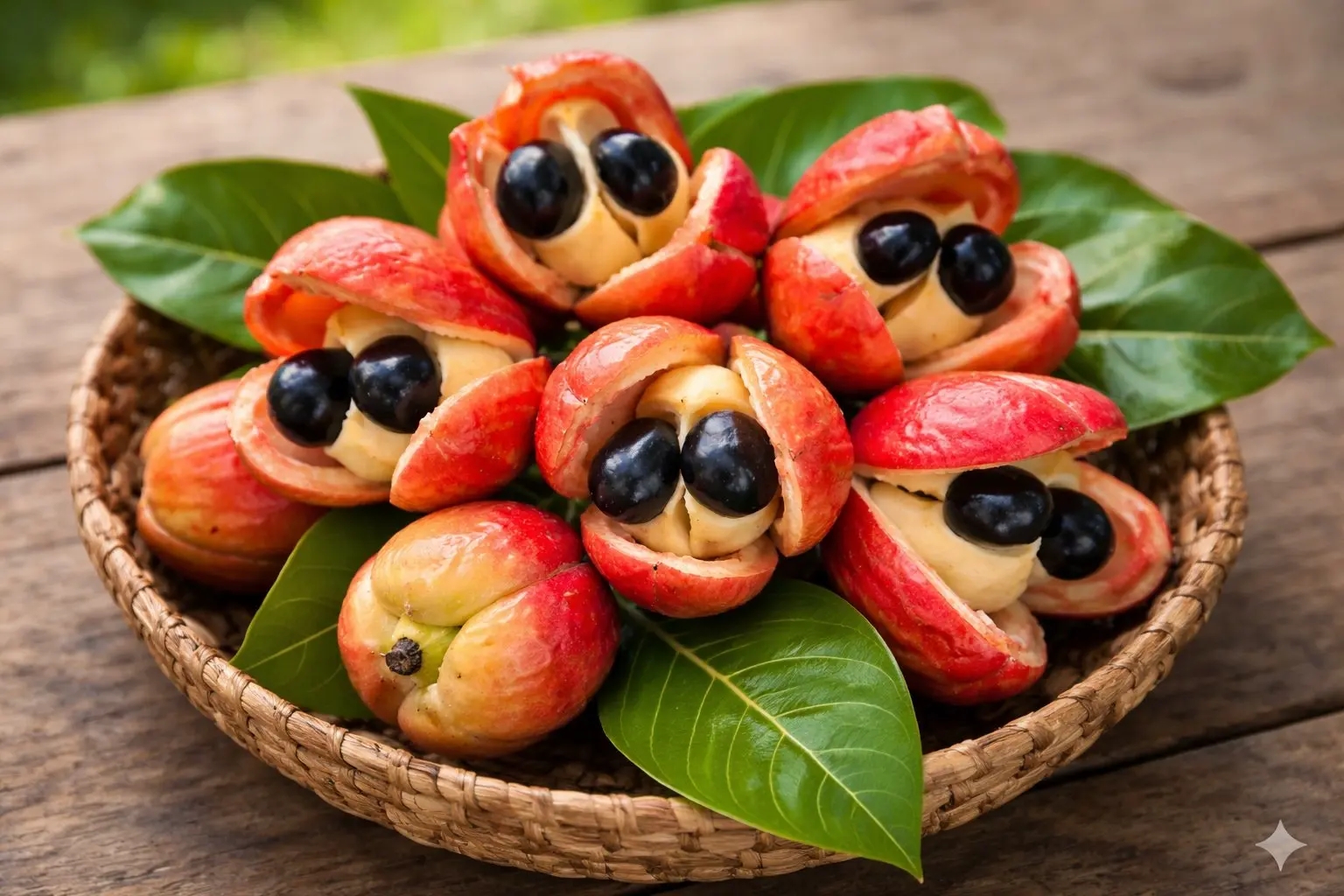
Ackee (Blighia sapida) originated in West Africa, specifically the Ghana region. The name comes from the Akan word 'ankye.' Enslaved Africans brought ackee seeds to Jamaica in the 18th century, where the fruit thrived in the tropical climate.
Captain Bligh's Connection
The scientific name 'Blighia sapida' honors Captain William Bligh of HMS Bounty fame. In 1793, Bligh transported ackee seedlings from Jamaica to Kew Gardens in London. Ironically, this same captain is famous for the mutiny on the Bounty — but his botanical contributions live on in every ackee tree.
Why Saltfish?
Salted cod became a staple because it was cheap, preserved well without refrigeration, and provided protein. When combined with ackee's creamy texture and buttery flavor, the result was magical. The dish became popular in the 19th century and was officially declared Jamaica's national dish in the 20th century.
How to Make Authentic Ackee and Saltfish
- •Soak saltfish overnight or boil for 20 minutes
- •Sauté onions, tomatoes, scotch bonnet pepper, and scallions
- •Add flaked saltfish, then gently fold in boiled ackee
- •Season with black pepper and fresh thyme
- •Serve with fried dumplings, breadfruit, or hard dough bread
Safety First
NEVER eat unripe ackee. The fruit must open naturally on the tree. Unripe ackee contains hypoglycin A, which can cause Jamaican Vomiting Sickness — a potentially fatal condition. Always discard the seeds and red membrane.
Want More? Download the Full Ebook!
This article is an excerpt from our premium guides. Get the complete ebooks with 50+ fruit profiles, 100+ recipes, meal plans, and expert research.
💯 30-day money-back guarantee • 📥 Instant PDF download
🍽️ Related Recipes
More Articles
Quick Answer
Ackee and saltfish tells the story of West African ackee brought to Jamaica by enslaved Africans, combined with preserved saltfish, and transformed into Jamaica's national dish through cultural resilience and culinary innovation.
- Best use: Research Caribbean fruits, tropical nutrition, recipes, and traditional island food culture.
- Nutrition summary: Focus on whole fruit, fiber, hydration, vitamin C, potassium, and antioxidant variety.
- Safety note: Use fresh fruit safely, store prepared foods cold, and consider allergies or medication interactions.
Search Intent Guide
| Intent | Direct answer |
|---|---|
| Informational | Learn what Ackee and Saltfish: The History Behind Jamaica's National Dish is, how it is used, and why it matters in Caribbean food culture. |
| Comparison | Use the linked comparison guides to evaluate taste, nutrition, seasonality, and recipe fit. |
| Navigational | Explore fruit profiles, recipes, health guides, seasonal pages, and downloadable guides from IslandFruitGuide. |
| Commercial | Future-friendly areas are prepared for ebooks, affiliate product cards, premium calculators, and downloadable wellness tools. |
People Also Ask
What is the quick takeaway from Ackee and Saltfish: The History Behind Jamaica's National Dish?
Ackee and saltfish represents a powerful story of cultural fusion — originating from West African ackee brought by enslaved Africans, combined with preserved saltfish, and elevated to Jamaica's national dish through resilience, resourcefulness, and the creation of a beloved breakfast icon.
Is this article medical advice?
No. IslandFruitGuide articles are educational and should not replace advice from a qualified healthcare professional.
Where can I explore related fruit guides?
Use the related guides section to compare fruits, find recipes, check seasonal availability, and read nutrition-focused pages.
IslandFruitGuide Topic Clusters
Sources and Editorial Review
Reviewed by: IslandFruitGuide Editorial Team
Last Updated: June 17, 2026
Traditional Caribbean usage: Cultural notes are presented as food heritage and traditional usage, not as medical treatment claims.
Nutritional references: Nutrient summaries are cross-checked against public food composition and nutrition education references where available.