Malay Apple
Syzygium malaccense
What is Malay Apple?
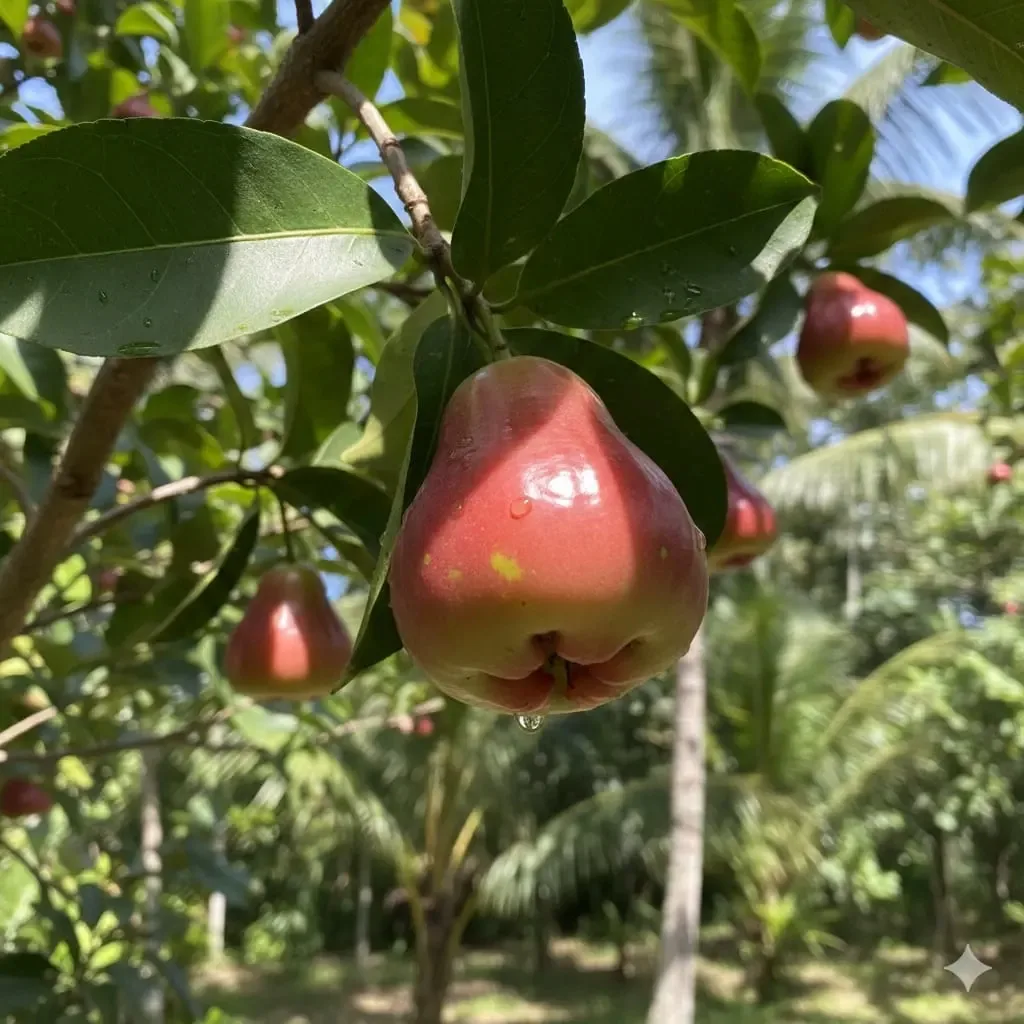
Malay apple, also called Otaheite apple or mountain apple, is Syzygium malaccense. It is a bell-shaped tropical fruit with crisp, juicy white flesh and pink to red skin.
- Also called:
- Malay apple, Otaheite apple, Mountain apple
- Season:
- May–August. See the Jamaican fruit calendar. Availability varies by location and weather.
Malay apple, also known as Otaheite apple or mountain apple, is a stunning bell-shaped tropical fruit with a bright pink to deep red skin and crisp, white, juicy flesh. It has a mildly sweet, rose-scented flavor with a refreshing crunch. A beloved fruit tree in Caribbean yards.
💚 Health Benefits of Malay Apple
- ✓High water content promotes hydration
- ✓Rich in vitamin C strengthening immune defense
- ✓Contains iron, which contributes to normal red blood cell function
- ✓Low calorie and high fiber aiding weight management
- ✓Traditional Caribbean remedy for diabetes and digestive issues
🍴 How to Eat Malay Apple
Wash and eat whole — the skin is edible. Bite into it like an apple for a refreshing, juicy crunch. The single seed in the center is not eaten. Also used in fruit salads and jams in the Caribbean.
📦 Storage & Preparation
Store at room temperature for 2-3 days. Refrigerate for up to one week. Not suitable for freezing due to high water content.
📊 Nutrition Facts
Good source of vitamin C, vitamin A, calcium, iron, and dietary fiber. Low in calories with about 25 calories per 100g, making it an excellent light snack.
Sources and further reading
- Botanical identity: Kew Plants of the World Online — Syzygium malaccense.
- Editorial policy · Suggest a correction
Quick Facts
Related Fruits
⚖️ Compare Malay Apple
See how Malay Apple stacks up against other tropical fruits — nutrition, taste, and uses side by side.
Open Comparison Tool →🏆 Fruit Match-Up
Soursop vs Sweetsop? Papaya vs Banana? Discover which Caribbean superfruit is your perfect match.
Find Your Match →🧠 Test Your Fruit IQ
Think you know Caribbean fruits? Take our 5-question quiz and unlock a special reward!
Take the Quiz →📖 Caribbean Tropical Fruit Guide
The ultimate ebook with 50+ fruit profiles, 100+ recipes, nutrition facts, and seasonal guides. Your complete tropical fruit encyclopedia.