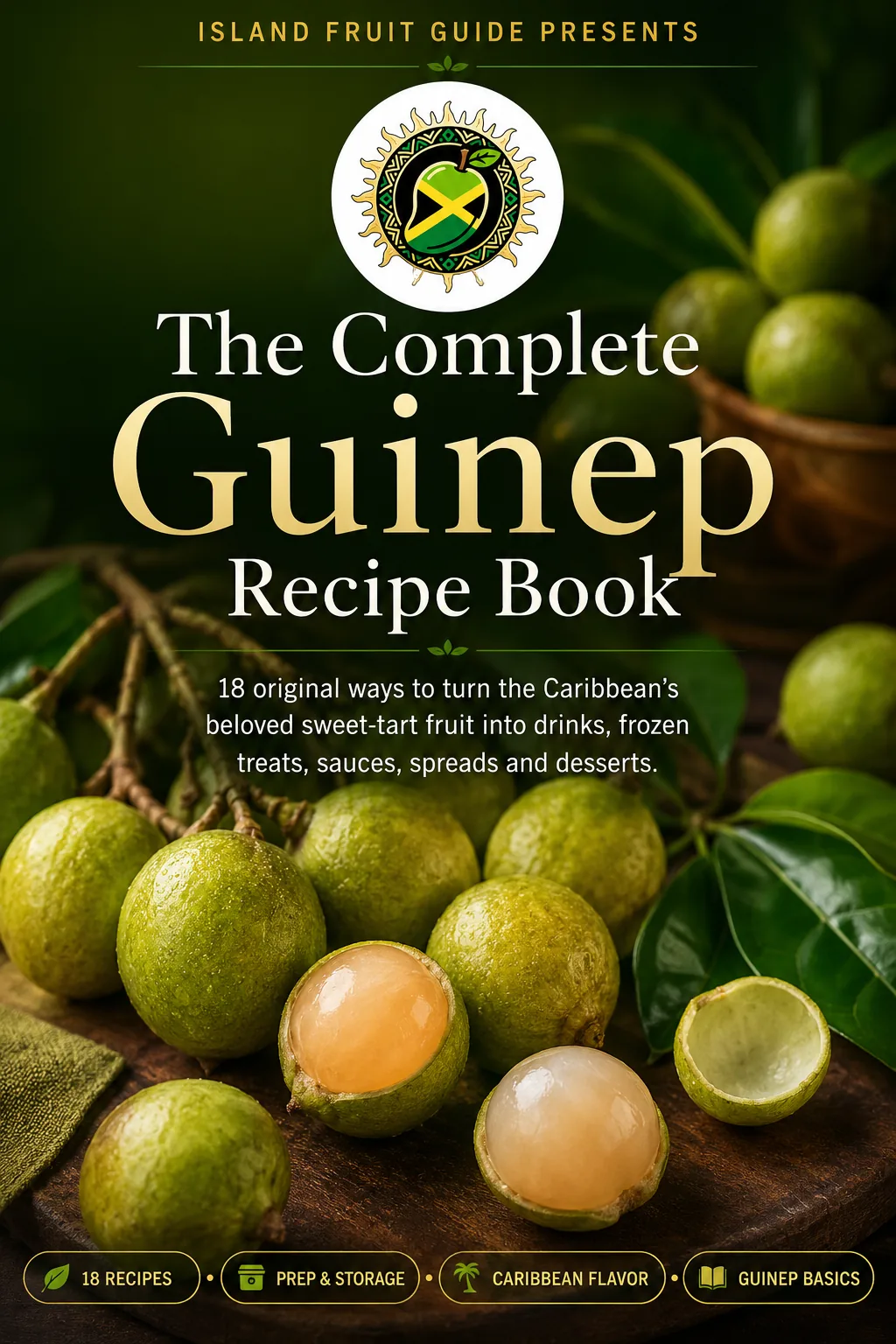
Guinep Recipe Ebook
20+ Authentic Caribbean Guinep Recipes • Health Benefits • Preparation • Serving Ideas
A Caribbean recipe collection celebrating guinep — also known as Spanish lime, quenepa, or mamoncillo. From classic guinep juice to punches, desserts, and savory dishes, this ebook is your complete guide to preparing, enjoying, and benefiting from this nostalgic island fruit.
Table of Contents
📋 Full Contents
- 1.Welcome to Guinep — Names & History
- 2.How to Choose, Crack & Eat Guinep
- 3.20+ Authentic Guinep Recipes
- 4.Guinep Nutrition & Health Benefits
- 5.Storage, Preserving & Flavor Pairings
- 6.Frequently Asked Questions
Enjoying the preview?
Welcome to Guinep — Names & History
Guinep (Melicoccus bijugatus) is one of the Caribbean's most beloved summer fruits. Small, green, and deceptively humble, these round fruits grow in heavy clusters and hide a sweet-tangy, salmon-colored pulp around a single large seed.
Depending on which island you grew up on, you call them guineps, Spanish limes, quenepas, or mamoncillos. In Jamaica and the Eastern Caribbean it's guinep; in Puerto Rico and Florida, Spanish lime; in the Dominican Republic, quenepa; and in Cuba, Venezuela, and Colombia, mamoncillo. They are all the same fruit.
Guinep is a quintessential street fruit across the islands. Sold in bunches at markets from Kingston to San Juan, it's the nostalgic childhood snack that generations of Caribbean families have cracked open under trees, at bus stops, and on seaside walks.
Why Guinep?
Guinep is more than a tasty snack — it's packed with vitamin A for eye health, calcium for strong bones and teeth, iron to help prevent anemia, and tryptophan that may support better sleep. With a low glycemic index and just 58 calories per 100g, it fits easily into a healthy Caribbean diet.
This ebook collects everything you need: how to pick ripe guineps, the best ways to crack and eat them, and over 20 authentic recipes — from classic guinep juice and punches to desserts and savory island dishes.
Get a Free Guinep Recipe
Enter your email and we'll send you a free sample guinep recipe instantly — plus exclusive island fruit tips.
No spam. Unsubscribe anytime.
What You'll Get Inside
Guinep FAQ
What is guinep?+
Guinep (Melicoccus bijugatus), also known as Spanish lime, quenepa, or mamoncillo, is a small green Caribbean fruit with a thin brittle shell and sweet-tangy salmon-colored pulp surrounding a large seed.
How do you eat guinep?+
Crack the thin green shell with your teeth or by squeezing between your fingers, then suck the juicy pulp off the seed. Don't bite the seed. Many people enjoy it with a dash of salt and pepper.
What are guinep health benefits?+
Guinep is rich in vitamin A for eye health, calcium for bones and teeth, iron to help prevent anemia, and tryptophan which may improve sleep. It has a low glycemic index and about 58 calories per 100g.
What can you make with guinep?+
Guinep can be eaten fresh, made into guinep juice (Spanish lime juice / quenepa juice) by soaking pulp in water with sugar, and used in punches, desserts, and savory dishes. The ebook includes 20+ recipes.
Related Fruit Guides
Ready for the Full Recipe Collection?
Get the complete Guinep Recipe Ebook with all chapters, 20+ recipes, and resources.